Gaming on TV Boxes
Bridging the gap between casual media consumption and high-fidelity living room gaming.
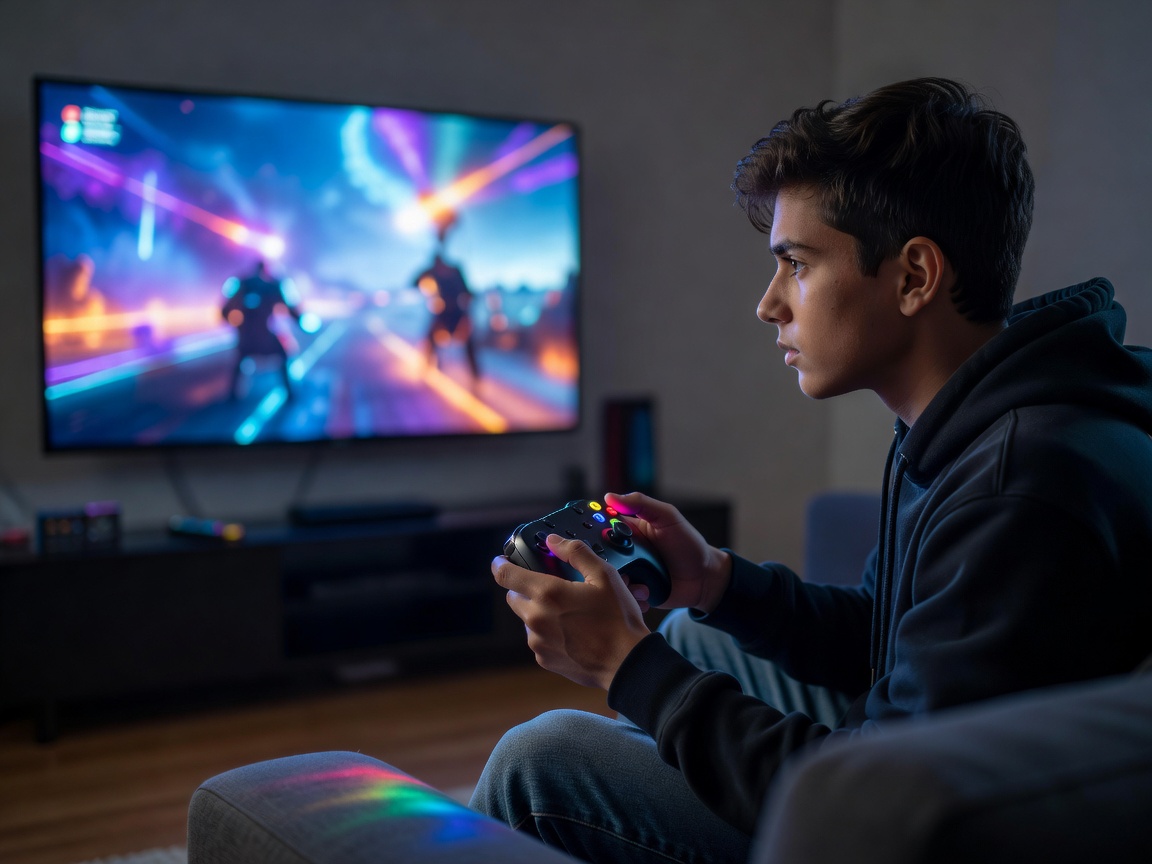
The Cloud Gaming Revolution
For decades, playing graphically intensive AAA video games required investing hundreds of dollars into dedicated console hardware or thousands into a custom PC rig. Today, a premium TV box can act as a fully capable console substitute, utilizing the power of cloud gaming. By processing the game on remote server farms and streaming the video feed directly to your television, the local hardware burden is virtually eliminated.
Services have evolved dramatically, reducing latency to levels barely perceptible to the average player. Utilizing these services transforms a standard media player into a gateway for massive digital libraries.
Local Network Streaming
For enthusiasts who already own a powerful gaming PC situated in an office or bedroom, a TV box acts as the perfect living room bridge. Through applications utilizing local network streaming protocols, users can cast their PC's desktop environment directly to the TV box.
| Connection Type | Typical Latency | Best Use Case |
|---|---|---|
| Gigabit Ethernet | 1-3 ms | Competitive multiplayer, fast-paced action |
| Wi-Fi 6 (5GHz) | 5-15 ms | Single-player RPGs, casual gaming |
| Wi-Fi 4/5 (2.4GHz) | 20-50+ ms | Turn-based strategy, puzzle games |
Because the data never leaves your home network, visual fidelity can remain incredibly high (often preserving 4K resolution at 60fps) without relying on internet bandwidth. The success of this setup relies entirely on router quality; a robust, hardwired connection is strongly recommended over standard wireless protocols.
Native Mobile Ports and Retro Emulation
Beyond streaming, modern set-top boxes possess enough native compute power to run software locally. The app stores are filled with mobile ports of classic console games that have been updated to support physical controllers. These games install directly to the device's internal storage, requiring no internet connection for gameplay.
Furthermore, the open nature of Android-based TV boxes has fostered a massive retro emulation community. With proper configuration, a single box can act as an archival library for decades of classic gaming history, capable of rendering 16-bit and 32-bit era games flawlessly with modern upscaling filters applied.
Controller Compatibility
The linchpin of any living room gaming setup is the controller. The industry standard has heavily shifted toward ubiquitous Bluetooth support. Modern TV boxes almost universally support the pairing of prevalent first-party wireless controllers originally designed for major gaming consoles.
When selecting a controller, prioritize standard layouts featuring dual analog sticks, a directional pad, four face buttons, and dual shoulder/trigger assemblies to ensure maximum compatibility across native applications, emulators, and cloud services.
Conclusion
While an avid competitive gamer might still require dedicated hardware, a high-quality TV box provides more than enough gaming utility for casual players, families, and single-player enthusiasts. By combining cloud services, local network streaming, and native applications, your media box can easily double as your primary gaming console.